DEU 20+ MW (modular)
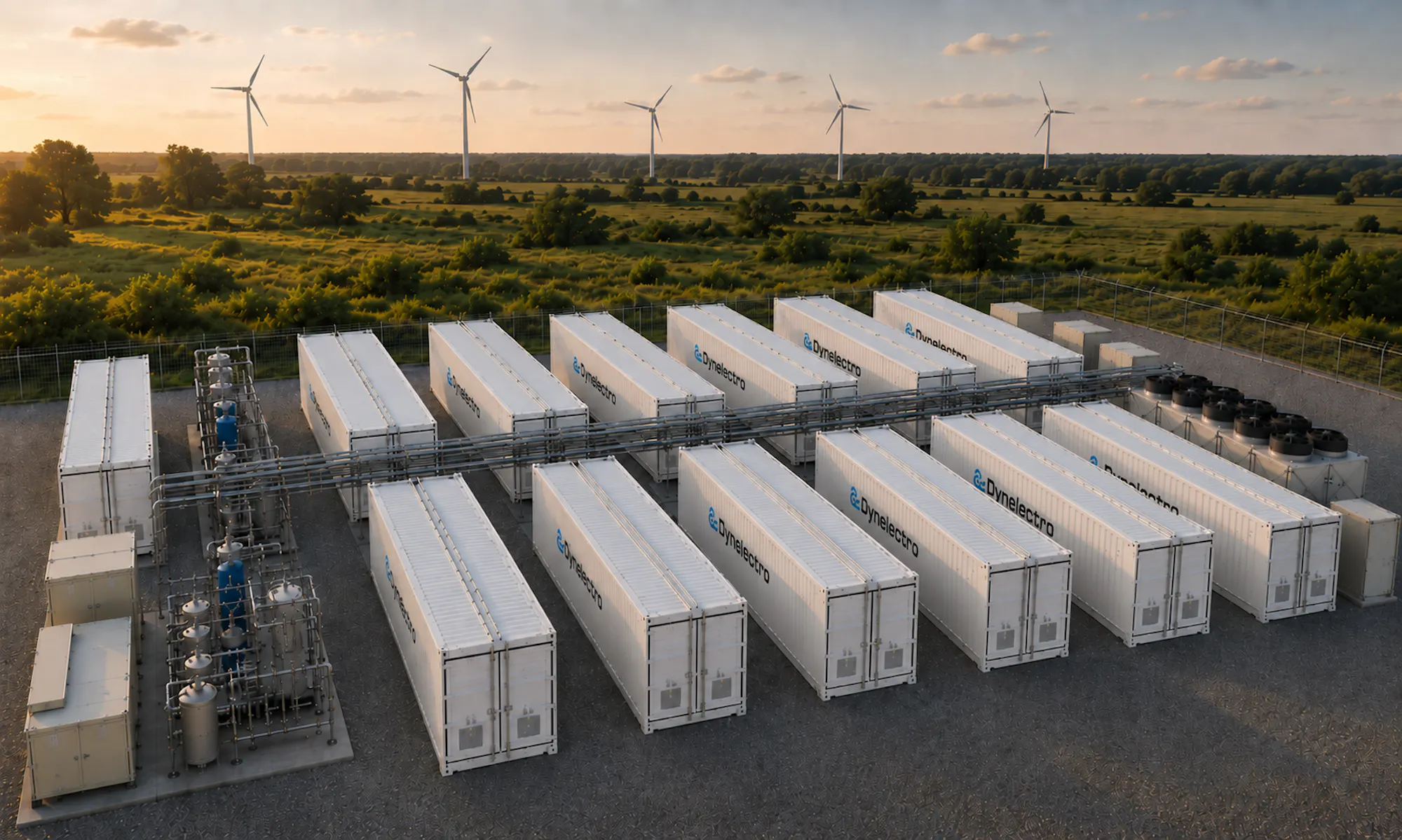
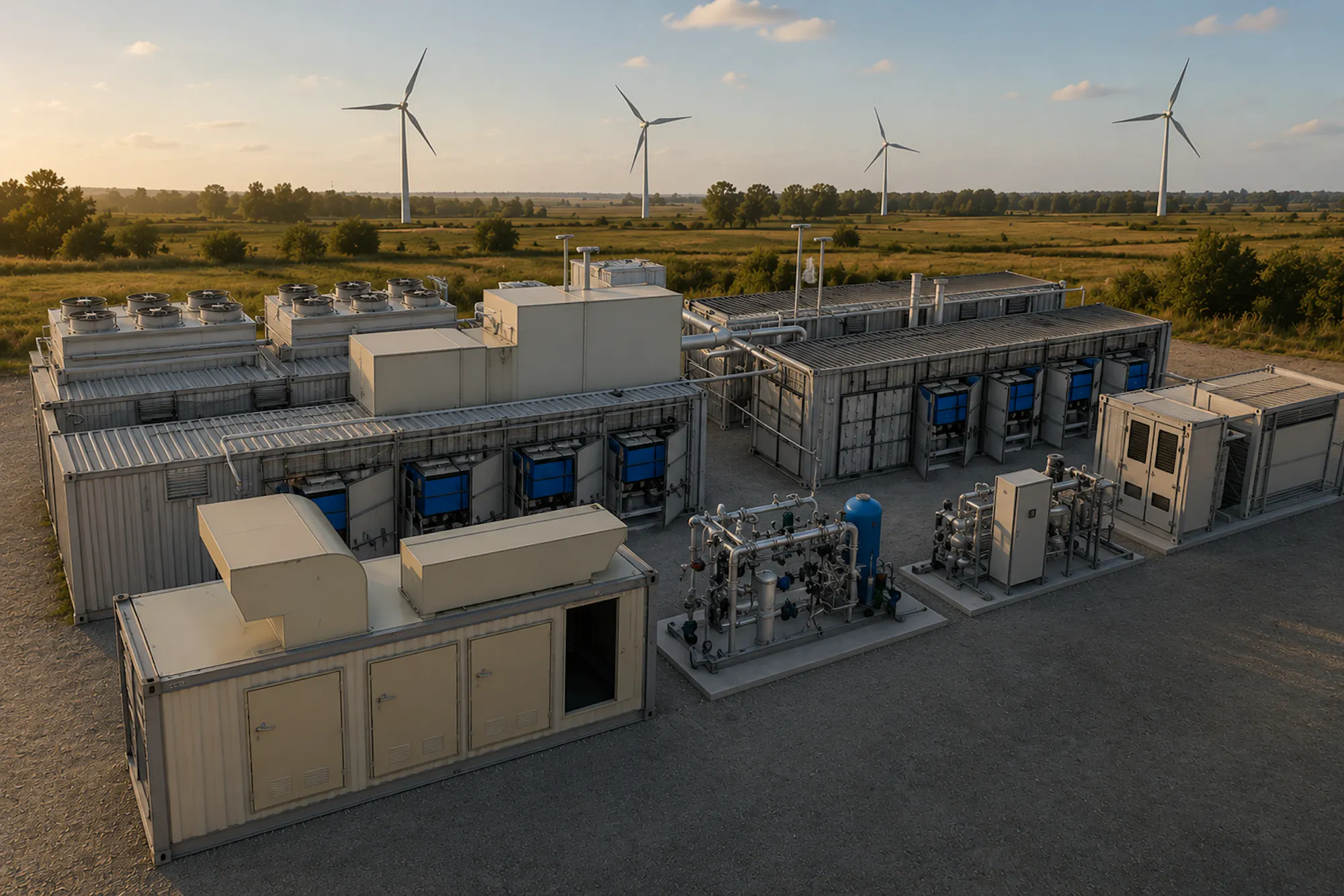
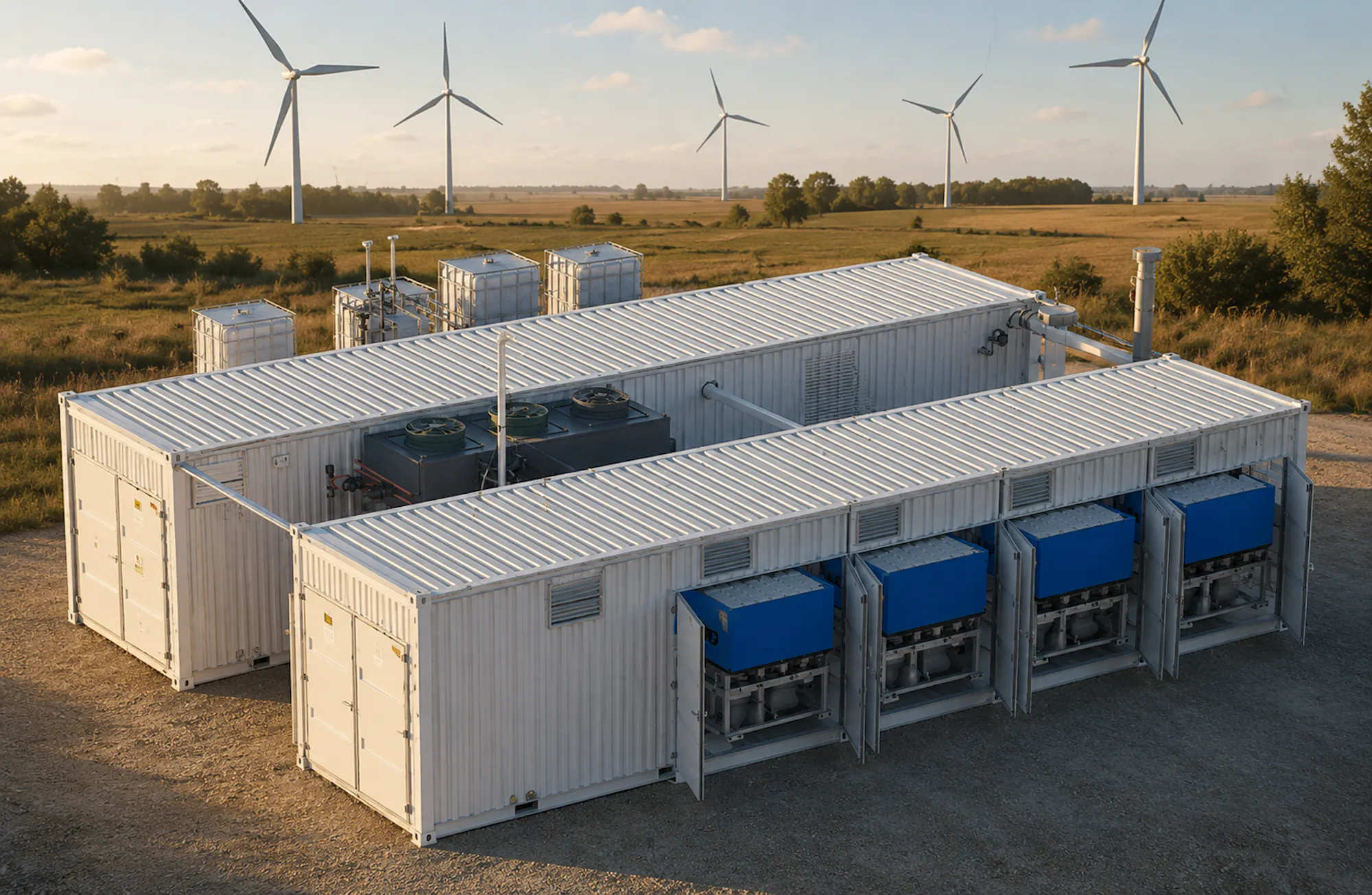
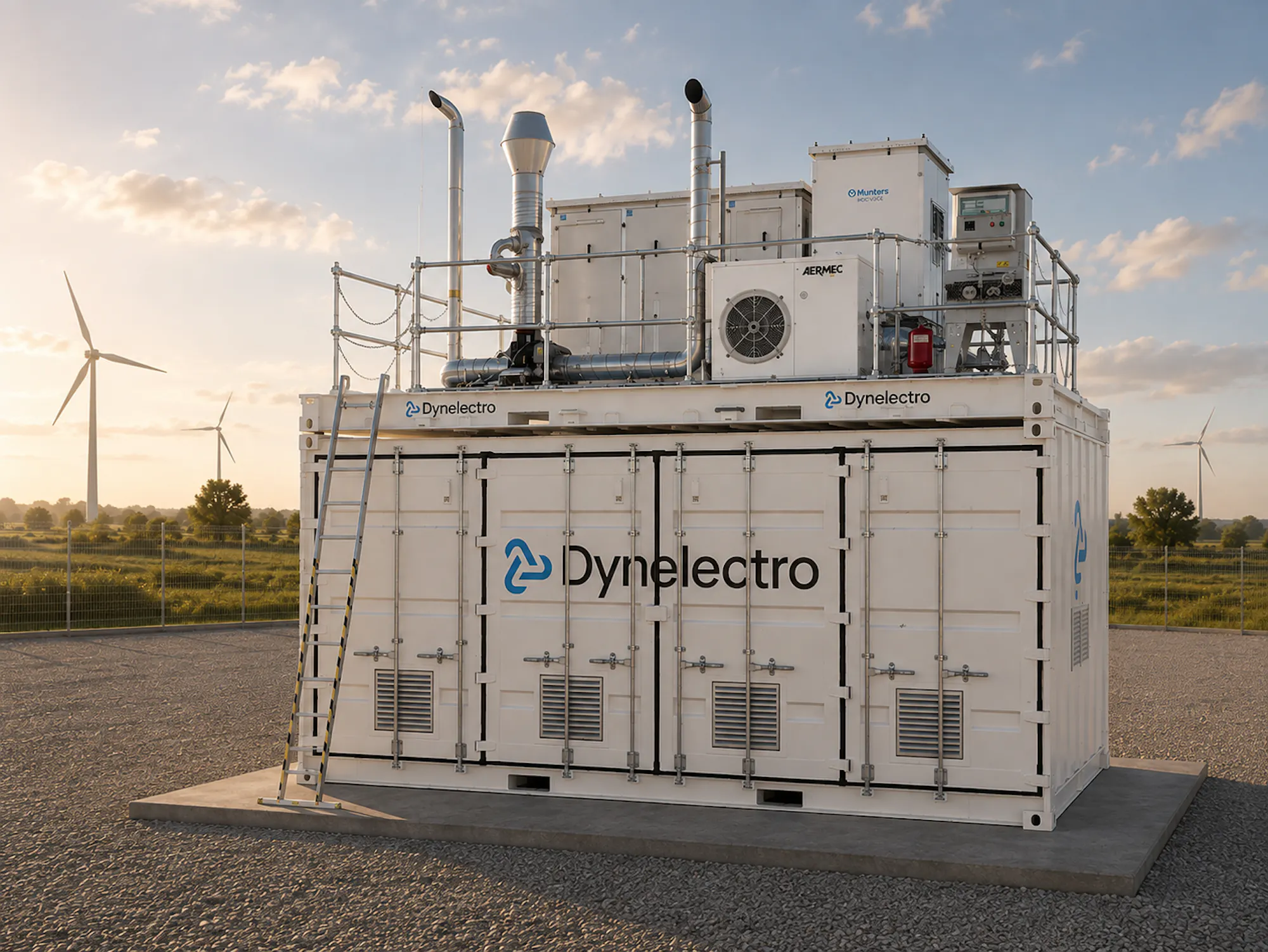
The DEU 20 MW is a modular industrial Solid Oxide Electrolyser System designed for large-scale hydrogen production. Powered by Dynelectro’s proprietary AC:DC architecture, it delivers industry-leading efficiency, ultra-low degradation and dynamic operation in a scalable containerised platform. Enabling industry-leading SOEC stack lifetimes of 7–10 years under industrial operating conditions. Size of system is flexible and can be adjusted in steps of 1.5 MW stack consumption.
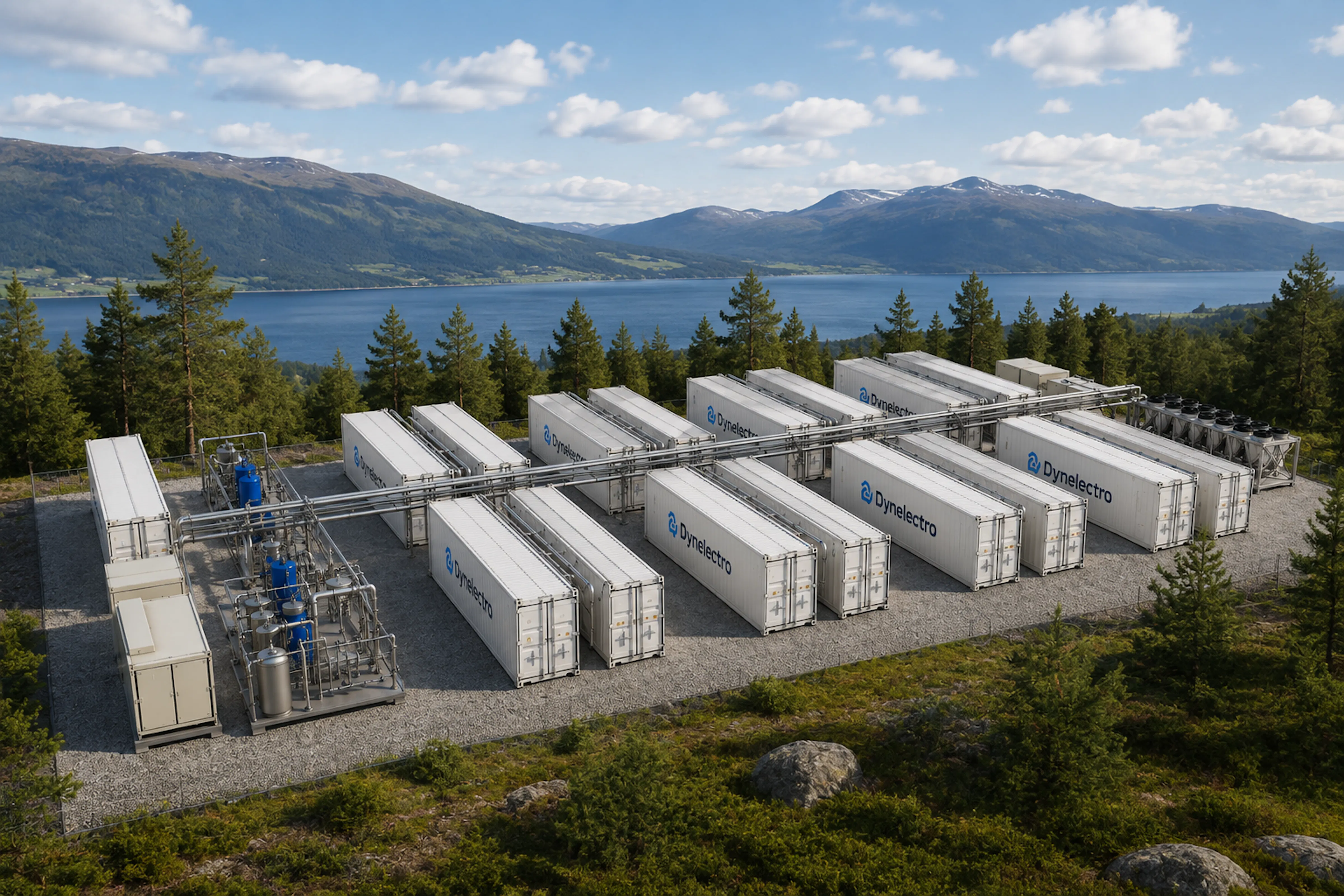
Engineered with precision
Each 20 MW system is designed for seamless integration into existing industrial plants and scalable installation for multi-MW configurations.
Documented performance
- Low stack degradation – enable 5x SOEC stack lifetime extension due to alternating AC/DC operation – <0.05% stack degradation per 1,000 hours
- Increase H2 output – 50% higher hydrogen output per power unit vs. Alkaline / PEM electrolysis
- Reduced cost – 20% lower LCOH vs. other PtX technologies
- Dynamic operation / Variable Load Following – ideal for fluctuating renewable input
- Ancillary Grid Service offering possible – flexible operation enables availability for FFR / FCR / FRR capacity offerings
Technical Specification:
| ELECTRICAL RATING | |
| Max. System power consumption | 20 MW |
| Power consumption (stack) | 33.5 kWh/kg (3 kWh/Nm³) |
| Power consumption (system) | 37.8-40 kWh/kg H₂ (3.4-3.6 kWh/Nm³ H₂) |
| System electrical efficiency with heat integration | ≈ 87% (electrical) |
| System electrical efficiency w/o heat integration | > 72% (electrical) |
| HYDROGEN PRODUCTION | |
| Max. Production rate | Up to 540 kg/h (10,800 Nm³/h) |
| Operational pressure | 0.025 bar(g) |
| Hydrogen purity (dry) | > 99.9 % |
| Hot start-up time | <10 minutes |
| Dynamic operation | 5-100% load (idle to full load) |
| Dynamic load change response time | < 30 sec (5-100%) |
| WASTE HEAT / STEAM INPUT | |
| Operational pressure | 4.5-6 bar(g) |
| Temperature | 150-200 °C |
| Consumption | 7320 kg/h |
| ADDITIONAL SPECIFICATIONS | |
| Ambient temperature | -20 °C to +40 °C |
| Footprint | Approx. 60 X 32m |
| Stack lifetime | <0.05 % degradation per 1,000 hours |